“We walk through life in a different way”
San Diego journalist Jerry McCormick was diagnosed with prostate cancer in 2025. He shared his experience with Word in Black and writes regularly on Substack.
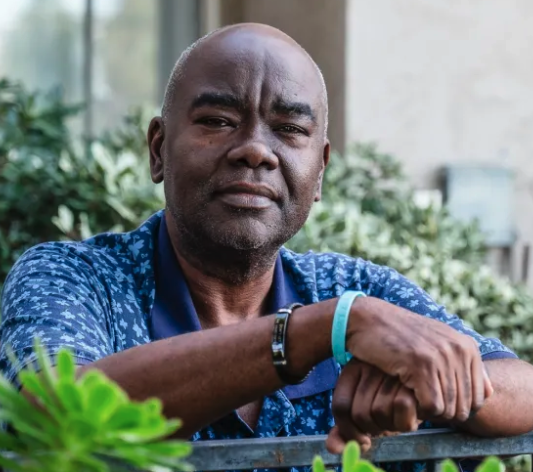
““I promised myself that I would use this experience to educate people,” he says. As a college professor, doing so is in his DNA. “If I know something, I want other people to know it. I don’t want them to get the sanitized version” of having prostate cancer. ”
Prostate cancer can be significantly more lethal for Black men, in part because diagnoses frequently occur at later stages, reducing available treatment options. As a result, Black men experience the highest death rate of any racial or ethnic group and are twice as likely to die from this largely preventable disease.
Additionally, as a gay man, McCormick’s sexuality needed to be considered, in his choice of treatment and expected side effects:
“McCormick had just started a new job and didn’t want to be out of the office for weeks. Surgery carried risks, including infertility, but as a gay Black man, he doesn’t plan to have kids.
Even so, he was concerned about how this decision would affect his husband, Richard. The two have been together for 23 years. McCormick was frank about his sexual concerns.
Indeed, the tradeoff for survival often includes sexual changes. According to the American Cancer Society, it’s common for men who’ve undergone treatment for prostate cancer — such as surgery, radiation, or hormone therapy — to experience some form of erectile dysfunction. Men may have “dry orgasms” where they feel pleasure without ejaculation. They may also experience retrograde ejaculation, where semen flows backwards into the bladder. And some men may also leak small amounts of urine.
“The mechanics of our sexual activity is different. We walk through life a different way,” he says. So he opted for the surgery since it seemed like a faster procedure that would allow him to move on with his life.”
Jerry continues to heal after his surgery and also advocate for prostate cancer awareness for Black men.
Related stories
Featured