Community of Practice - Trans Voices in Gyne Cancer Care
Read a recap of our latest Community of Practice discussion (July 2026).
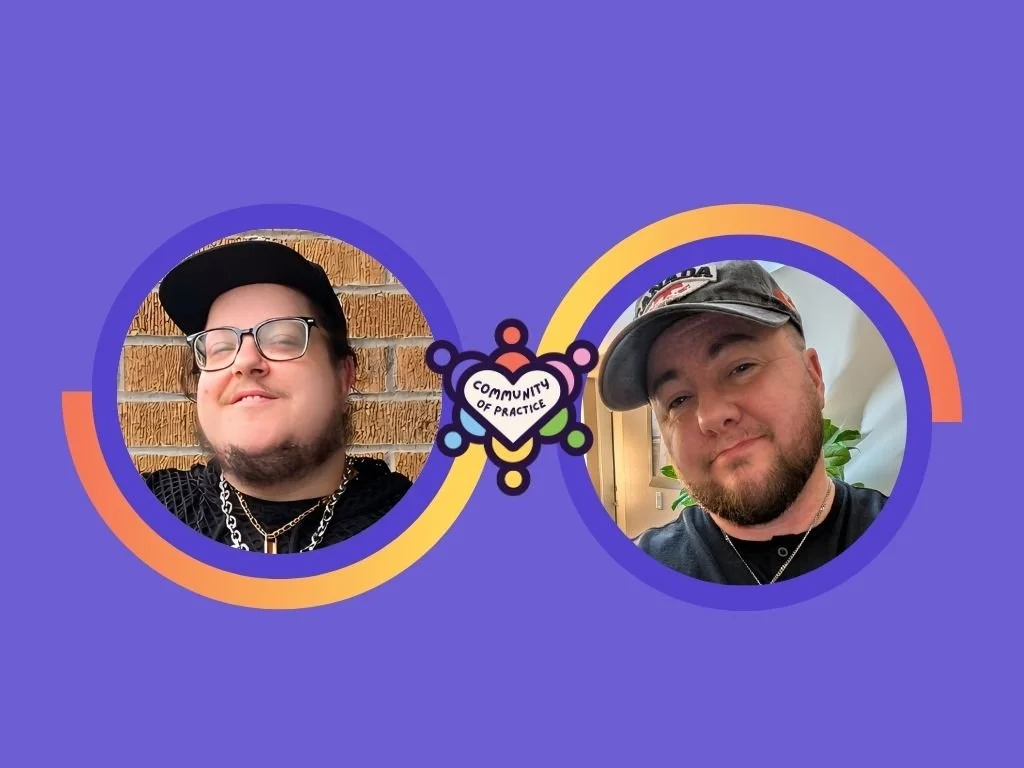
In this Community of Practice gathering, Tristan Bilash and James Moriarty talked about navigating gynecological cancer as transgender men. They introduced themselves as trans men with lived experience of gynecological cancer who now use those experiences to advocate for more inclusive cancer care. Both described wearing multiple "hats" as survivors, professionals, researchers, and community advocates, emphasizing that these intersecting identities shape how they engage with healthcare and with others facing similar diagnoses.
A central theme was the experience of being "the first" or "the only" transgender person that many healthcare providers encounter. Tristan reflected that although his ovarian cancer treatment occurred before his transition, he now imagines what it would be like to navigate the system as the man he is today. He described the loneliness of repeatedly being the first trans man known to providers treating gynecological cancers, while acknowledging that this experience has become less isolating through finding community with Queering Cancer and others with shared experiences. James echoed this sentiment, noting that even providers with some experience caring for trans patients often have very limited exposure, making each person's experience highly individualized.
“I am very much still the first transgender man that many of the healthcare providers in the system have ever seen or met or dealt with for a gynecological cancer.”
The discussion explored the nuanced relationship between gender dysphoria and gender euphoria in cancer care. James described how dysphoria delayed his diagnosis because seeking care through a “women's health” system felt overwhelming. Once he entered care, however, he experienced both deeply affirming and profoundly harmful interactions. He spoke warmly about an oncologist who prepared extensively before meeting him, consistently respected his identity, and, along with his family doctor, ensured that decisions about restarting testosterone centred his quality of life and autonomy. In contrast, he recounted experiences of misgendering, dismissive administrative interactions, and a degrading encounter in the emergency department that left a lasting impact. Despite these experiences, he reflected that the affirming moments demonstrated what respectful care can look like.
James also challenged common assumptions about fertility and trans people. Although his hysterectomy relieved his cancer-related symptoms, he shared the grief of losing the possibility of becoming a "seahorse dad" and carrying a child. He praised his oncologist for discussing fertility preservation without making assumptions about his desires based on his gender identity, instead approaching the conversation as she would with any patient who might value future parenthood.
Tristan reflected on how transitioning changed his relationship with disclosure. Before transition, he could selectively share his experience as an ovarian cancer survivor to build rapport with patients in his role as an oncology social worker. After transition, disclosing that he is a gynecological cancer survivor often requires revealing his trans identity, forcing him to continually assess whether it is safe to disclose. He also described his cancer surgery as one of his first gender-affirming surgeries, illustrating how cancer-related treatment can hold both affirming and difficult meanings simultaneously.
When discussing what affirming gynecological cancer care looks like, Tristan emphasized that it begins long before the clinical encounter. Inclusive intake forms and opportunities to accurately identify oneself immediately change the tone of an interaction. He shared a recent experience with a pelvic floor physiotherapist who demonstrated trauma-informed care by asking what language he used for his body, respecting his terminology, and creating space to discuss his concerns before beginning treatment. Although being her first transgender patient remained anxiety-provoking, her willingness to learn and adapt helped him feel safe and respected.
The conversation wrapped up with reflections on the TRANSforming Gyne Cancer Care project and the importance of community. James described the project as creating far more than research outputs; it has fostered a community where trans and gender-diverse people with gyne cancers no longer feel alone. He expressed hope that the project's resources will provide future patients and healthcare providers with practical guidance that did not exist when he or Tristan were diagnosed, ultimately making cancer care more informed, affirming, and inclusive.
“I love being around people who are dedicated to making the landscape look different than it did when I had to navigate it.”
The breakout rooms invited participants to imagine that Tristan or James had asked them to attend a gyne-oncology appointment as a friend and advocate. This provided a chance for healthcare providers to switch hats and step outside of their professional role and imagine themselves as a friend, considering the experience from a more human and relational perspective: What would I notice? What would I challenge? How would I want my friend to be treated? This generated some thoughtful and positive discussion! Thanks to everyone who attended, we hope you found the session enlightening.
On behalf of everyone who joined, we’d like to extend our deep gratitude to Tristan and James for their generous and impactful story-sharing, their advocacy, honesty and all-round excellence.
Our next gathering will be held on October 23rd 2026. Let’s keep the conversation going.