QC at the OncoDiversity conference
The OncoDiversity/OncoDiversitié conference was held at Le Centre hospitalier de l'Université de Montréal (CHUM) on June 11th and 12th. The event was organised by Dr. Jean-Marc Bourque (Founder and Executive Director of OncoDiversity and Associate Professor of Radiation Oncology at CHUM) and over 20 national and international speakers presented a wide range of topics related to queer and trans cancer care.
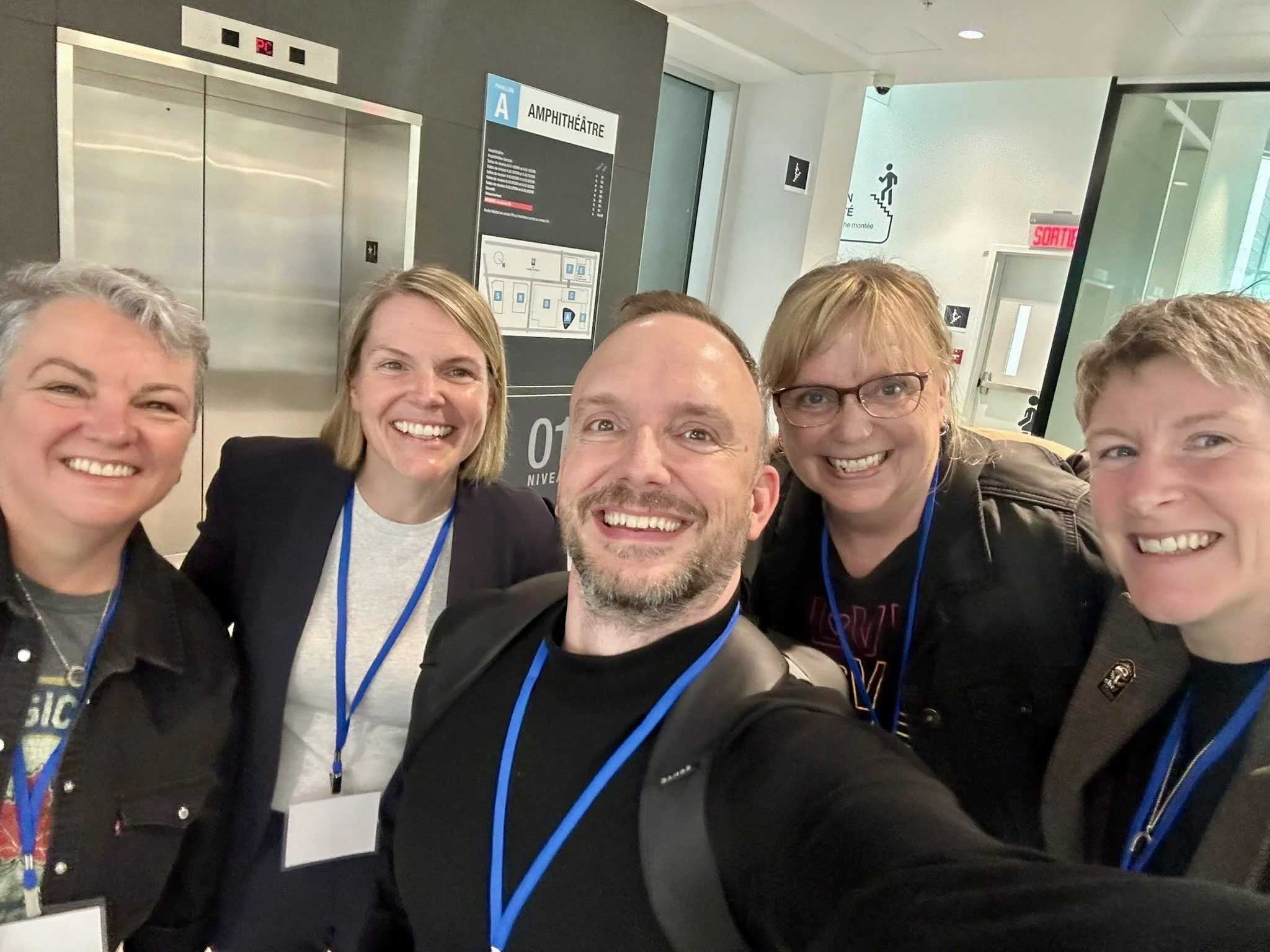
This was the first conference of its kind in Canada, and it was thrilling to be in a space with like-minded people, colleagues, friends, and community members who share a deep commitment to this work. What made the experience especially meaningful was finally meeting so many people face to face for the first time after years of connecting online, collaborating virtually, and supporting one another from afar
Themes over the two days included:
Understanding the Canadian landscape and 2SLGBTQI+ disparities
Prevention, screening and early diagnosis
Diagnosis and access to affirming treatment
Research methods and inclusive data collection
Survivorship, sexual health and quality of life
Systems change and developing a national agenda (including a consensus building workshop)
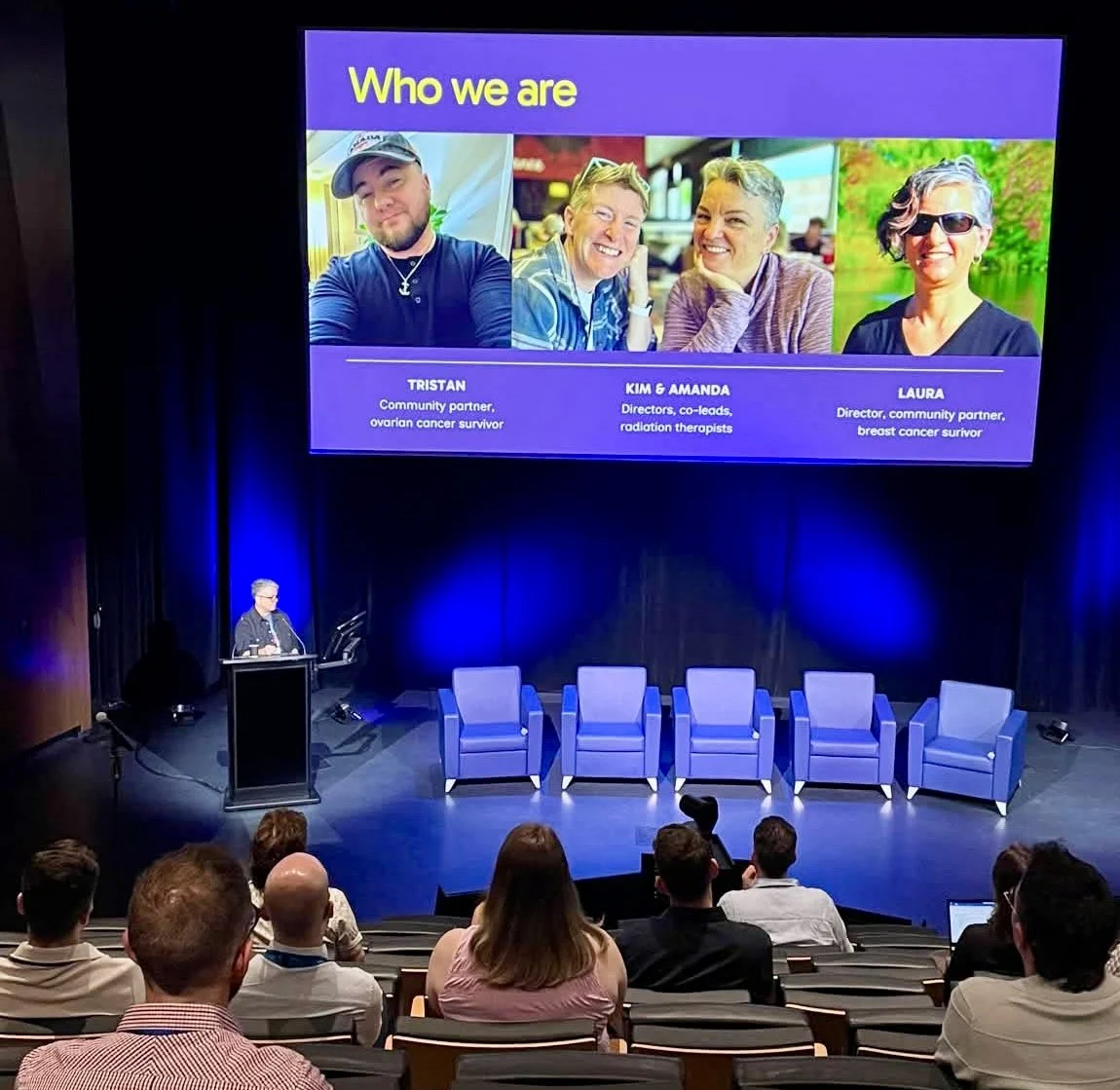
We were proud to open the conference with our talk Building Canada’s 2SLGBTQI+ Cancer Movement where we gave an overview of the history and the work of Queering Cancer. We shared our origin story, our collated stories and supports for folks affected by cancer, and the education we offer for healthcare professionals. We also talked about our favourite current projects and some upcoming initiatives, emphasizing how Queering Cancer’s work has been, and will always be shaped by the folks most impacted.
It would be hard to recap all of the many excellent presentations, but a few of our highlights were:
Presentation title: From the March 2026 forum to a national agenda: Umbrella review and recommendations for inclusive oncology care
Dr. Julie Lapointe and Sophie Parent, co-leads of the Inclusive Oncology Study, presented their study that aimed to describe the care pathways and healthcare experiences of LGBTQ+ people affected by cancer, as well as their relatives and care providers. The first part of the project was a series of semi-structured interviews held between December 2024 and December 2025. 51 people were interviewed, including 21 people with cancer, 13 relatives and 17 care The group then developed a series of vignettes based on the themes of the interviews, and used them to guide conversation in a subsequent educational forum. They included involvement of loved ones, treatment effects on sexuality, fertility preservation and gender dysphoria, shared decision making regarding breast reconstruction, adequacy of community support and heteronormative testing protocols. The vignettes are useful for teaching and can be requested by emailing onco.inclusive@crchudequebec.ulaval.ca.
Presentation title: Bridging the gap: Establishing Canada’s first specialised oncology clinic for transgender and non-binary individuals
We were excited to hear from Olivier Landry and Dr. Marie-Anne Archambault-Grenier about the brand new Trans Cancer Clinic at CHUM. This initiative is led by a multidisciplinary team of oncologists, researchers, and community leaders from CHUM, Université de Montréal, Clinique l’Actuel, Aide aux Trans, and international collaborators from the UK’s Cancer and Transition Service (UCATS) and Rainbows Breast Cancer Clinic at the Mayo Clinic. Clinician specialties represented include medical and radiation oncology, palliative care, gender affirming care, radiation therapy and pharmacy. The team have recently opened the doors to their first patients to provide coordinated oncology and hormone therapy management and gender affirming cancer care that is bilingual and available via telehealth. This is the first of its kind in Canada, partly modelled on the UK Cancer and Transition Service (UCATS). Importantly, people can self-refer and the service is available for all stages of the cancer pathway, from diagnosis to survivorship. The speakers commented that they hope this is the blueprint for similar much-needed clinics across Canada.
Presentation title: Community driven research at the HIV-cancer intersection: The CBRC experience
Micheal Kwag and Marie Geoffroy from the Community-Based Research Centre (CBRC) talked about their organisation's work - since its inception in 1999 gathering data to improve the care and experiences of gay men living with HIV, to today’s broader focus on queer and trans health. The CBRC’s "Sex Now Survey," is the largest and longest-running national survey of sexual minority and gender-diverse people, and the annual CBRC Summit is Canada’s largest 2SLGBTQI+ health conference. We particularly loved the research principles that inform CBRC’s work, namely; access, advance social justice, balance, community empowerment, centre lived experience, historically informed, impact-oriented, holistic view of health, intergenerational and bravery and love 💛 What amazing inspiration for truly humane and revolutionary research!
In the margins of cancer: LBTQ experiences of breast and gynecologic cancer care
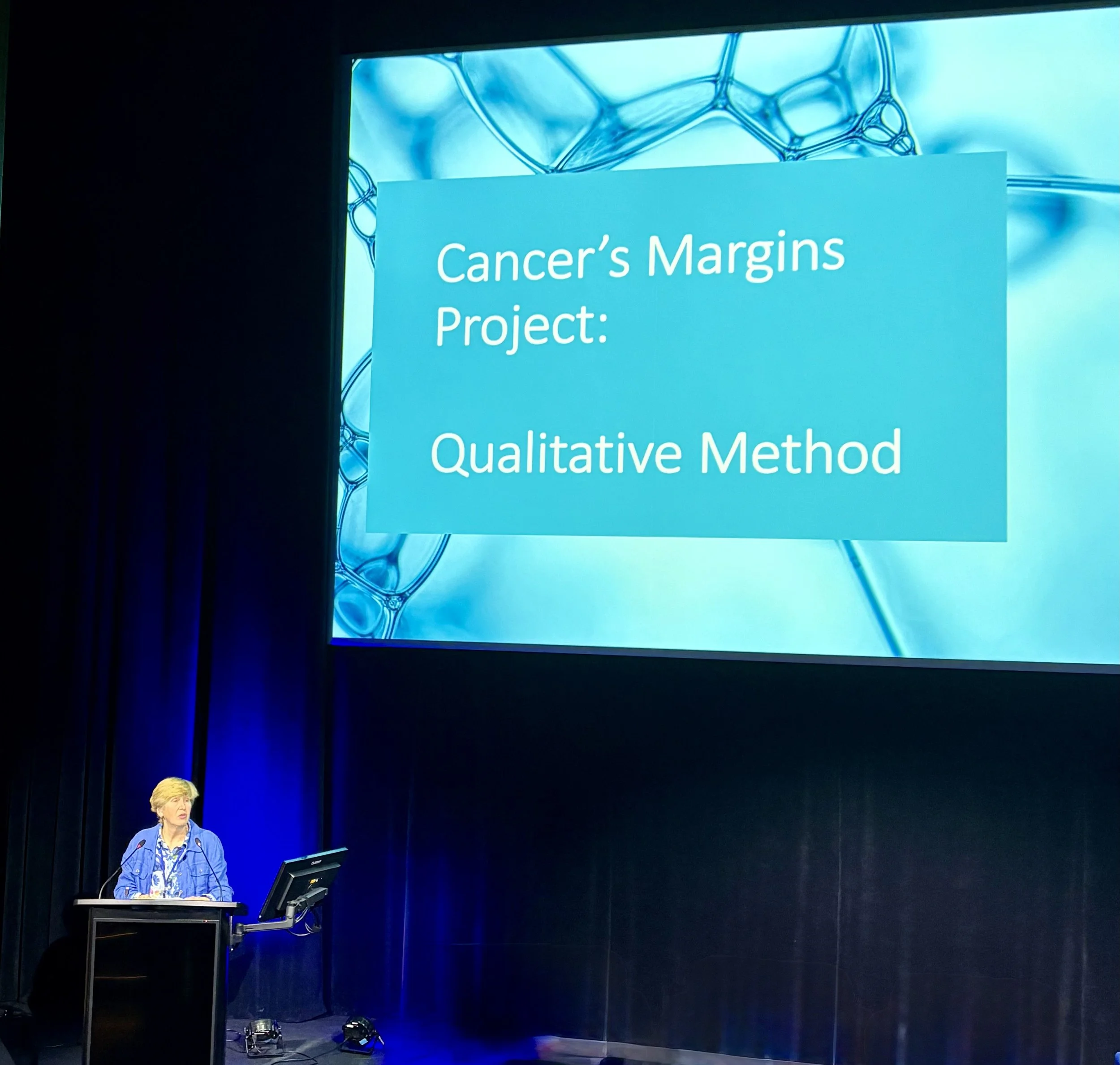
Cancer’s Margins has been an important influence on our work for many years. The project used a community-and-arts based approach to explore sexual and gender diversity, and experiences of breast and gynecologic cancer health, support and care. Participants were invited to create digital stories with a feminist videographer. Dr. Genevieve Rail, Distinguished Professor Emerita, Simone de Beauvoir Institute and Concordia University, (shown below) discussed how the narratives from the participants differed from typical cancer stories, which leave little room for queerness. Dr. Rail discussed the biomedical vs the biographical and the idea of incommensurable knowledge sharing in cancer contexts, people may consider themselves autonomous but only when that form of autonomy is recognized by the medical establishment. The Cancer’s Margins work showed how cancer can become an important part of resistance.
Presentation title: Building multinational coalitions for 2SLGBTQI+ cancer equity: The European Cancer Organization experience
The European Cancer Organisation (ECO) is a not-for-profit federation of over 40 member societies that brings together cancer professionals and patients across Europe. To facilitate their work ECO have nine specific networks led by co-chairs from member societies. The inequalities network tackles disparities in cancer care across Europe and one of their priorities is promoting inclusive cancer care for the queer and trans community, advancing research, and informing policy. Dr. Nicolò Battisti (a medical oncologist at NHS Royal Marsden) presented early findings from a pan-European citizen and patient survey focused on disparities faced by 2SLGBTQI+ individuals in cancer screening and care. The survey is collecting data on demographics, cancer screening experiences, satisfaction with care and general healthcare attitudes. Initial data included findings on medical mistrust where:
More than half of the participants somewhat disagree that doctors have the best interest of queer and trans people in mind
More than half somewhat disagree and strongly disagree that queer and trans people receive the same medical care from doctors and healthcare workers as people from other groups and;
More than 30% agree that they have been personally treated poorly or unfairly by doctors or healthcare workers because of their sexual orientation, gender identity and expression and sex characteristics.
Qualitative data included a quote from one participant who described themselves as, “unseen, unheard, neglected.” The survey is still open and can be accessed here.
Honorable mentions (as always) go to Margo Kennedy and Dr. Christian Schulz-Quach, and Dr. Jenn Croke (below) from Princess Margaret Cancer Centre’s Sexual and Gender Diversity in Cancer (SGDC) Program. Jenn gave an overvioew of HPV-related gynecological cancers in 2SLGBTQI+ people on day one. Margo’s talk emphasised the unique meaning of chosen family to queer and trans folks, and also the importance of their acknowledgment and involvement in cancer care. After an overview of the services offered by the SGDc, Christian introduced a screening of his documentary On Queer Aging and Endings followed by a panel discussion that delved into queer grief, moral distress, how (and if we can) build trust with traumatised people accessing cancer care and more.
We left Montreal feeling inspired, grateful, and surrounded by an incredible amount of love, generosity, and hope for what we can collectively accomplish in the future.