The Last Caravan: Mary Morgan’s good death
Mary Morgan was Queering Cancer’s first community partner. She was the inspiration behind our name, our first patient story and a guiding light as we developed the website and direction for the organization.
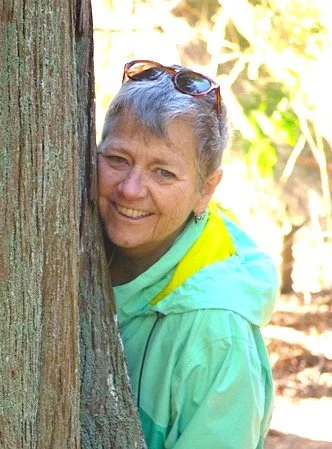
Mary lived her last few years in Powell River, a small community on the British Columbia coast close to nature. In April 2021, age 64, she passed away there surrounded by love and chosen family.
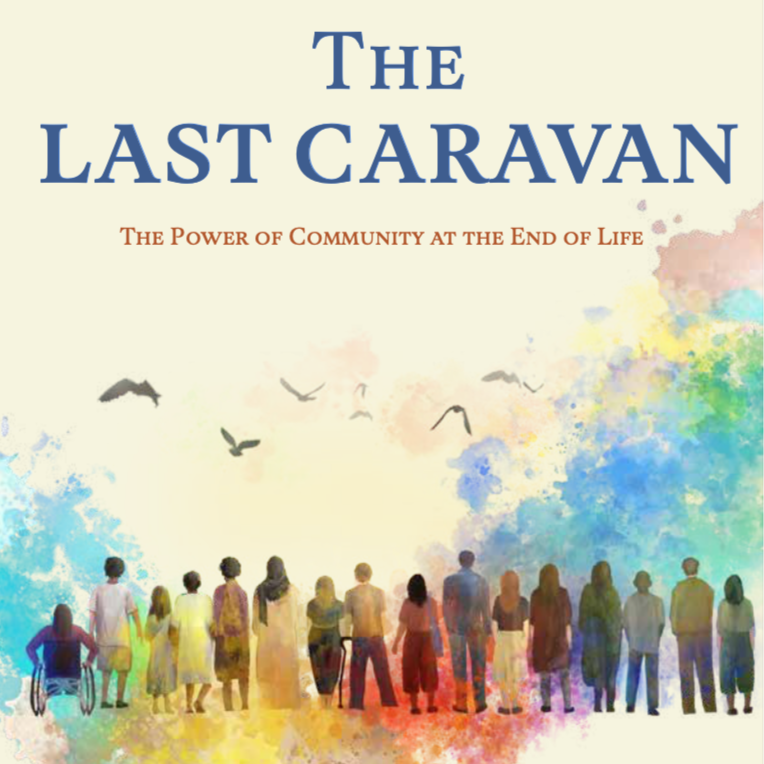
Author Anna Byrne was Mary’s close friend. Mary asked Anna and two other friends, Jules and Laurie, to join her “dying team” and help her die at home. Over the next 16 months, leading up to her death through Medical Assistance in Dying (MAID), Anna, Jules and Laurie carried out Mary’s vision of a death shaped by beauty, ceremony, and care. Anna has written about the experience in the book The Last Caravan which is published by Caitlin Press.
Anna spoke to us about the book and finding connection, meaning, and joy at the end of life.
QC: What inspired you to write about Mary’s story?
AB: Mary! I’m a cancer survivor and spent seven years in the medical system and now work in hospice, but rarely have I met anyone as intentional about the emotional and spiritual parts of dying. No one I’ve met approached their dying as an opportunity to educate others and build community. Mary felt knowledge should be rooted in heart-based, lived experience, and she was willing to use her death as a blueprint for exploring community deathcare. Pretty quickly, Jules, Laurie, and I realized we had become part of something special that could benefit others. It wasn’t until a year and a half after her death that I had the space to start the book, but really, we were writing it together from the beginning.
QC: What can queer folk take away from this in terms of finding meaning at the end of life?
AB: Three takeaways are chosen family, genuine, informed choice, and authenticity. Mary had many chosen families throughout her life that gave her a sense of belonging and mutual care and she wanted one for her death. Find your people—we all have a higher chance of getting our needs and wants met if we go together.
Mary felt her death was a mirror and magnifier of what is possible at the end of life, replicable within the particulars of each person’s desires, diagnoses, resources and social realities. There are creative, meaningful alternatives available alongside conventional options.
Lastly, make it your own. As serious as Mary could sometimes be, she also had a totally wacky sense of humour. She loved dressing up in kooky clothes or getting naked. The morning of her death, she put on a pair of huge blue sunglasses and said, “Am I in heaven yet?” We laughed a lot through the process. She wasn’t afraid to combine grief with joy—what a gift!
QC: What did advocacy mean to Mary? What kind of legacy would you say she has left us?
AB: Mary’s advocacy was born of her genuine love for humanity and the earth. After leaving home at age 17, she spent her life working in economic development in post-conflict countries around the world. Though she was exposed to extreme injustice, poverty, and violence, she also fell in love with the beautiful diversity of the human spirit and of human bodies. Love demands action, so advocacy was a natural outpouring.
Mary would often say, “It’s not about me, it’s about us.” By us, she meant not only the team, but society, particularly those who belong to historically marginalized groups. She believed that aging, illness, dying and grief are vital parts of the human experience, worthy of being accompanied, and that ordinary folks have the capacity to care for one another. I think her legacy will be inspiring new ideas about how all levels of community can collaborate so that a range of inclusive, inexpensive, and sustainable end-of-life options can emerge. Together, we can weave a wider net of care for all.
You can read Mary’s Queering Cancer story Radical, Fierce and Bold here.